
For anyone looking for encounters with animals in the wild, I’d highly recommend the Flinders Ranges in South Australia. On a recent visit we saw plenty of kangaroos, emus, goats, sheep, eagles and other birdlife.
Some of them crossed our path literally, running across the road in front of the car and van, and others ventured close to where we were camped. Here are just some of the critters we encountered along the way.
Emus
There are emus galore in the Flinders at the moment and we saw plenty of young ones too, following along behind the male parent bird, who takes care of them for about the first four months of their lives.
The adult birds can grow to up to 2 metres tall making them the second largest birds in the world, and they feed on fruits, seeds, growing shoots of plants, insects, other small animals, and animal droppings. The birds will live in one area if there is enough food and water but can move up to 25 kilometres a day to find suitable conditions if needed.
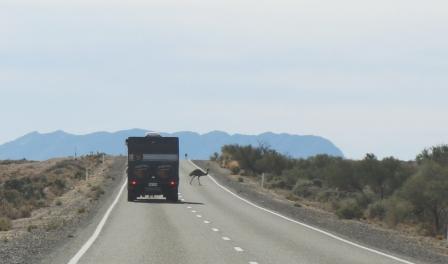

The emu can reach speeds of 50 kph and have a stride of three metres, which is just as well when they decide to dart out in front of you to cross the road. One thing to always look for is if one crosses in front of you there’s bound to be more so be aware. It really pays to scan roadside edges as you’re watching the road ahead.
Kangaroos
We also saw a lot of kangaroos and especially after the ranges received a dumping of rain. Unfortunately quite a few of them were on the roads drinking from pools of water, so a big tip is to be especially alert for roos after rain. Some of them were quite small so probably not used to the perils of being on the road.

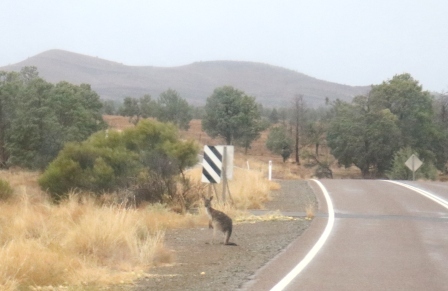

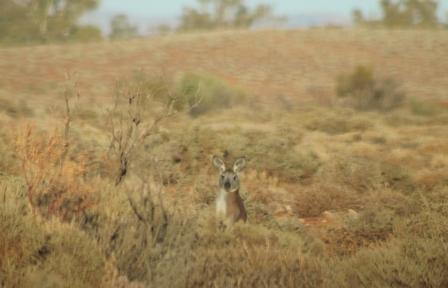
We encountered roos at a couple of stations stays where we set up in bush camping areas. Mostly they would move around at dusk and dawn but they ventured close enough to see them clearly.


Goats & Sheep
Many of the stations aren’t fenced where roads cross through so you have to be mindful that there can be wandering stock. Driving through the Flinders Ranges is a time to definitely be paying attention to the roads as we saw flocks of sheep grazing on roadsides and crossing the road sometimes too. Feral goats were another species we saw close to road edges.

Wedge Tailed Eagles
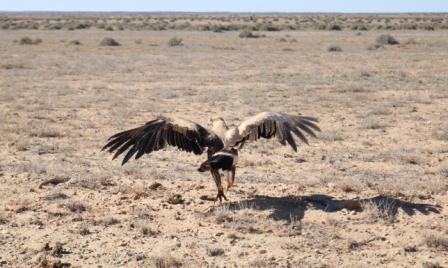
Every time we venture to the Flinders or outback areas I keep my eyes peeled for these magnificent birds and usually we’ve seen them feeding on road kill. For that reason it pays to slow down when you see any road kill, these birds are usually reluctant to leave their feed behind and sometimes seem to wait until the last minute before flying off.

They are Australia’s largest bird of prey and one of the largest eagles in the world. They can have a wingspan of up to 2.3 metres and the larger than males, female birds can weigh up to 5 kilograms.
Wedgies will eat rabbits, lizards, birds and small animals and can lift about 50% of its body weight. They also scavenge dead animals, hence the need to be careful when approaching road kill.
I was lucky enough to get some close up photos of a pair of wedgies which had been feeding on road kill. As we passed them we stopped the car, and I thought they’d fly away straight away but they weren’t too keen to leave their meal behind so just hopped further away on their meaty legs, until I retreated.

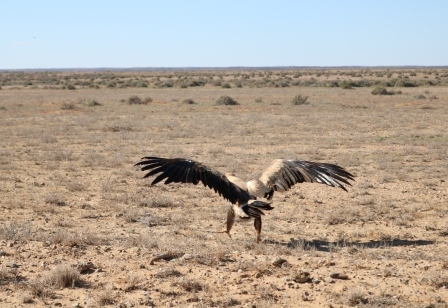
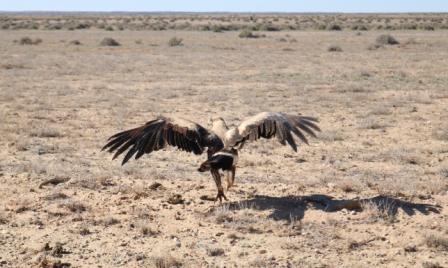
One thing you might notice from the photos is just how well the animals are camouflaged in their surroundings, which makes it all the harder to see them out there, but keep your eyes peeled and you never know your luck.
Other animals you may see in the Flinders Ranges are wallabies, echidnas, native mice and a variety of lizards and snakes as well as plenty of bird life including galahs and other colourful parrots.

To immerse yourself in the ancient rugged mountains, gorges, giant eucalypts and landscapes of the Flinders Ranges takes roughly a five and a half hours drive from Adelaide.
Drive safely and enjoy the wildlife,
Glenys
Discover more from Caravan Correspondent
Subscribe to get the latest posts sent to your email.
 Caravan Correspondent
We call it KEG Watch…kangaroo, emu, & goat. 😳
LikeLiked by 1 person
Oh that’s a goodie! Lots of kegs in the outback. 🙂
LikeLike
And they each have their own style of playing chicken with you.
LikeLiked by 1 person
Flinders Ranges National Park in South Australia looks like a good place to see some of the iconic Australian wildlife species amidst beautiful rugged scenery. I’d like to set my eyes on the Yellow-footed rock wallaby. Thanks for sharing, and have a good day 🙂 Aiva xx
LikeLiked by 1 person
Yes rock wallabies are gorgeous too, a little bit more elusive. I think we saw some in our travels, but they stay up high away from prying eyes, and are so agile they can disappear hopping over rocks quite quickly.
LikeLike