A drive of under two hours will get you to Ardrossan on the eastern side of Yorke Peninsula where you can indulge in the seafood it’s well known for, especially the blue swimmer crab.
The town has a long jetty (although this 1876 built structure was under repair when we visited) or you can rake for crabs in the shallow waters north and south of the town.
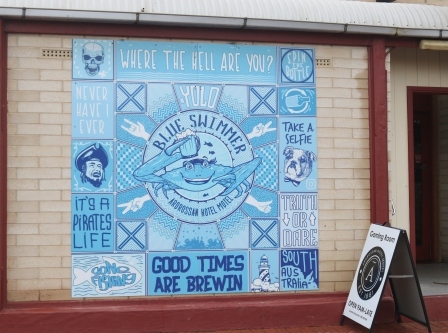
Ardrossan in fact is so well known for these crabs, that there is even a Blue Swimmer Brew, a mid-strength beer made especially for the local hotel by another Yorke Peninsula business, Watsacowie Brewery at Minlaton. We had to put it to the taste test, and can definitely recommend it!
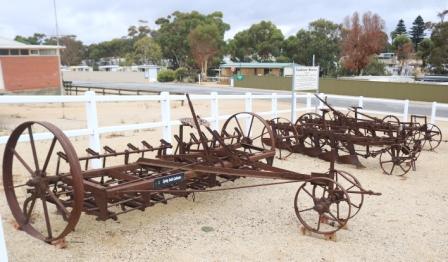
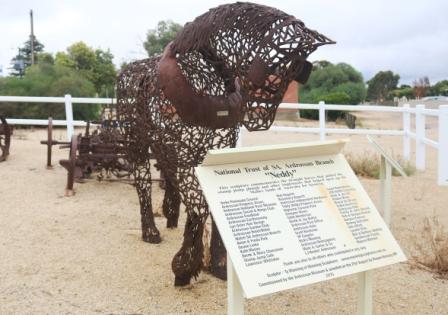
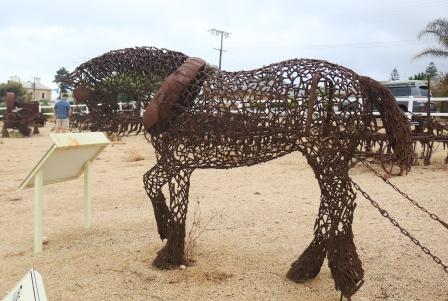
Caravanners and campers are well catered for with two caravan parks in town and across the road from the Ardrossan Caravan Park is Gundersen Reserve which has a collection of old farm equipment to see, including the Stump Jump Plough. This iconic South Australian invention was made here in Ardrossan.
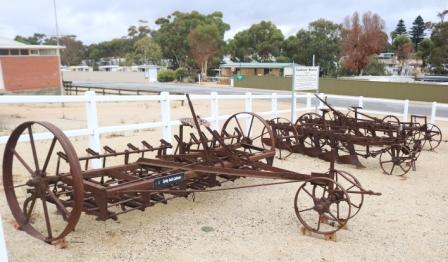
Its design revolutionised agriculture because the spring loaded blades could jump over obstacles which enabled farmers to clear rocky and stump filled land. The reserve also has a brilliant sculpture of a draft horse, the type that would pull the plough, this one named ‘Neddy”, which was made by a well-known South Australian sculptor Ty Manning.
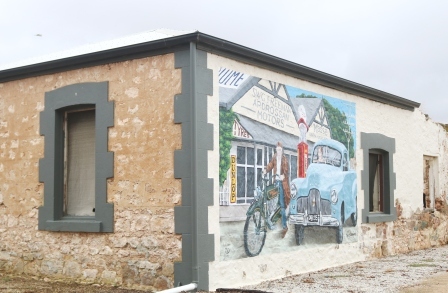
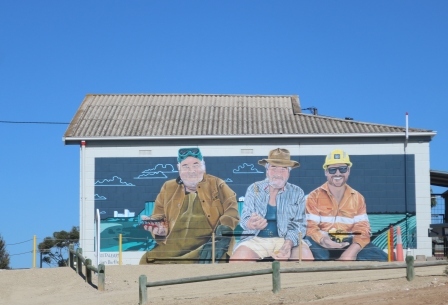
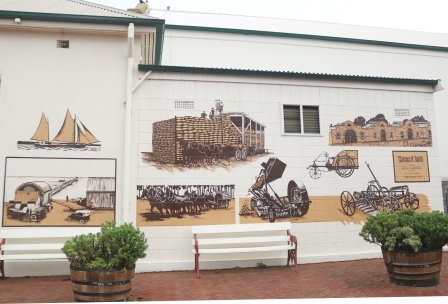
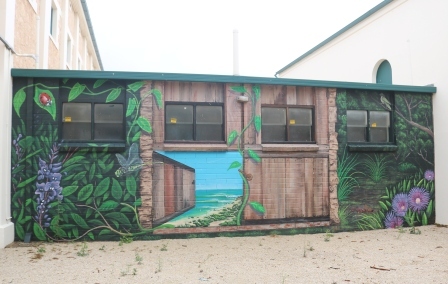
Taking a drive around town you’ll find some artworks with historical references as well as acknowledging the current images of life as it is in Ardrossan today.
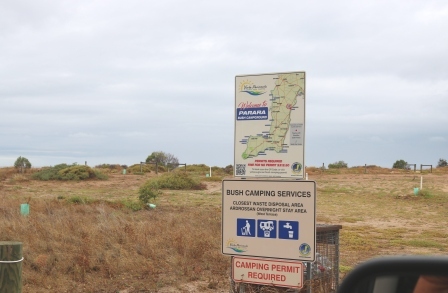
Around 5 kilometres south of town is a bush camping option at Parara, for people wanting to save a few dollars and have a less structured stay near Ardrossan. For $20 per night you have space to park a caravan or camper, a basic toilet and access to the beach.
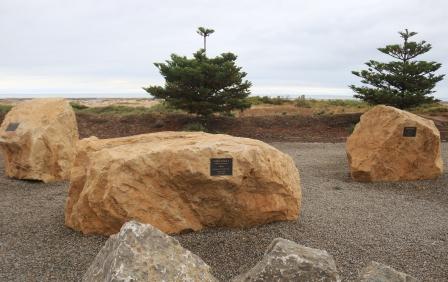
There is also a memorial here which marks a sad day for the community when a tragic stranding of sperm whales happened on the 8th of December 2014.
Seven whales beached in the area at low tide, but as with many of these episodes the reason why isn’t known. The species which were deep sea sperm whales are not normally sighted in the shallow waters of Gulf St Vincent so it was thought that they may have been disorientated.
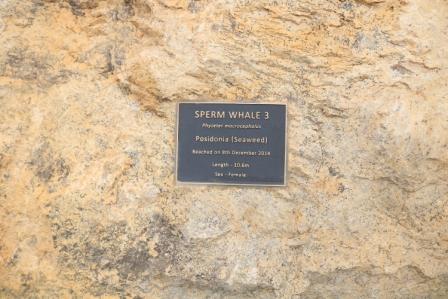
No other mass strandings of this type had ever happened in South Australia so it was a devastating event for locals and many others in the state. Staff from the SA Museum attended and took measurements, photographs, details and tissue samples for future studies. The animals, each around 11 metres long, were then moved with heavy equipment and buried.
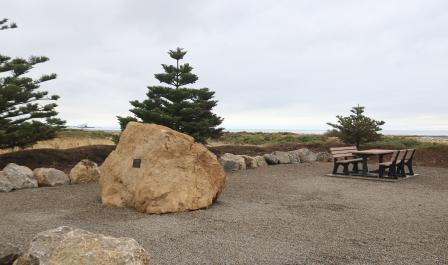
The memorial is a series of rocks that signify each of the whales, which were given names by local school children.
On a positive marine environment note, Ardrossan is also the home to Windara Reef, a limestone reef seeded with Australian Flat Oysters that was installed in 2017, with the aim of restoring shellfish reefs in the gulf. The reef was proposed to restore habitats and improve marine biodiversity, fish production and water quality in the gulf
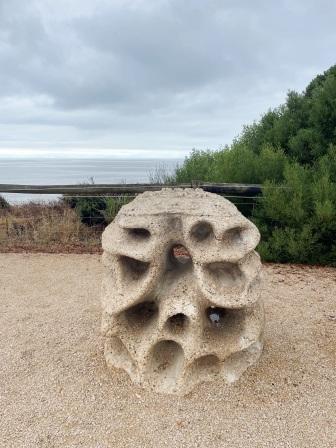
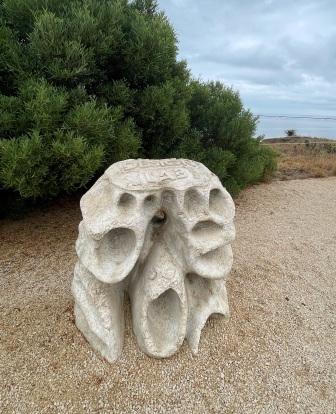
The manmade reef was built using 60 custom made concrete structures and 800 tonnes of local limestone and covers an area of 20 hectares of seafloor. It was named using the Narungga name for this eastern area of Yorke Peninsula. It’s the first restoration reef in South Australia and the largest in Australia.
The initiative was a joint project between the Government of South Australia, Adelaide University, the local Yorke Peninsula council and the Nature Conservancy Australia.
The results seen so far from the artificial reef is promising too with more schools of various fish and crabs being seen, and oysters have been found surviving on the reef. Surveys, videos and research are ongoing to keep monitoring the site.
Add Ardrossan to your visit list next time you’re on Yorke Peninsula.
Cheers
Glenys
Discover more from Caravan Correspondent
Subscribe to get the latest posts sent to your email.
 Caravan Correspondent