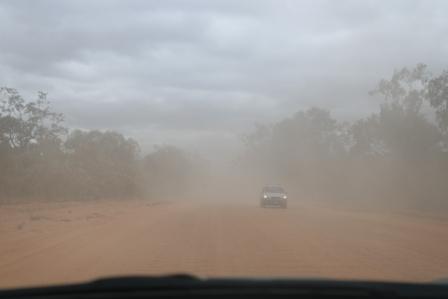
The start of our journey to the tip, began at Lakeland, the point where we decided to leave our caravan in storage and start the trek. Yes we’d heard the stories that you can take your caravan all the way, but ours is not an off road van and we were quite comfortable with the idea of having an adventure and tenting all the way instead. It didn’t take more than the first day of travelling to feel very sure that we’d made the right decision.
We travelled on the PDR (Peninsula Development Road) because we weren’t out to prove anything other than to make it to the tip with our vehicle and ourselves undamaged! There is the Old Telegraph Track too which plenty of people take to really test their vehicles and their own ability against challenging 4WD terrain.
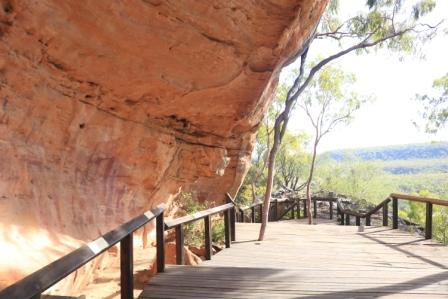
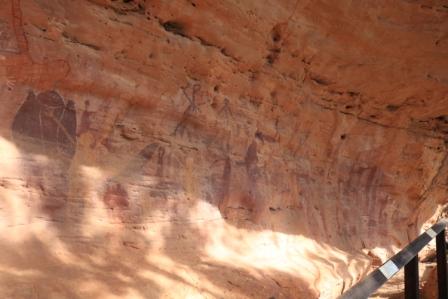
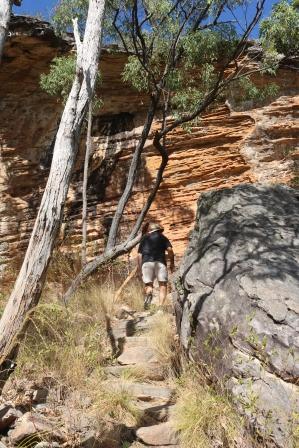
The first leg of the journey was bitumen all the way, and just short of Laura we stopped to look at some aboriginal rock art at Split Rock. It costs $30 per person to visit which you can pay online or there’s an honour box to leave your money. This is one reason to carry cash as there was no internet reception out here anyway. There’s a bit of a steep climb over rocky terrain for the first part of the trek, but luckily there are some railings to hold on to in the steepest parts. Eventually the terrain flattens out and then there were three sites to look at rock art, Split Rock, Flying Fox and Tall man, all containing incredibly detailed paintings and stories, protected by overhanging rock.
Continuing on the road was still an easy drive with a few narrow bridges which have UHF radio call points, which heavy vehicles use to warn you of their approach. UHF radios are your best friend on this journey for communication between yourself and the road trains that are frequent up here, and also to hear from other travellers.
A little over 120 kilometres from Lakeland the dirt road began and from here on the road changes from bitumen to dirt for varying lengths, but the dirt sections were still not too bad. The road houses along the way are godsends, little oases where you can stop for food, drinks, information and they all have camping areas out the back. We had a quick stop at Hann River Roadhouse then continued on.
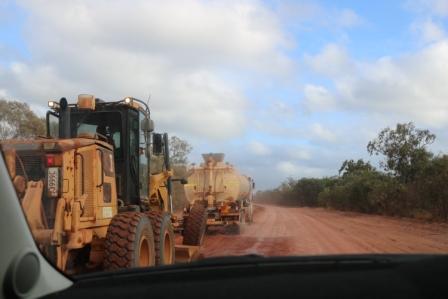
Anywhere and anytime along the way you’ll see graders and watering trucks doing there bit to keep the roads in good condition but things can change daily depending on the amount of traffic coming through and whether there has been rain or not. With the dirt becoming more frequent we let our tyre pressure down to 35psi, and as you travel on the bitumen sections you get a warning of dirt sections coming up by the way the road colour changes to a dirty brown on the opposite side.
In the worst sections of dirt it’s not uncommon to see everyone driving in the gutters off the road edge because they are much smoother than the road itself. It’s a weird thing to see, a huge wide road with no one on it, but cars and trucks happily cruising along down the edge.
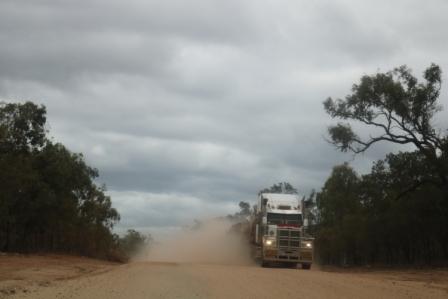
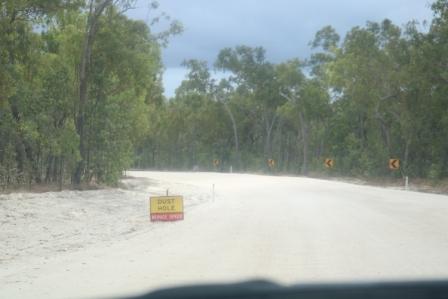
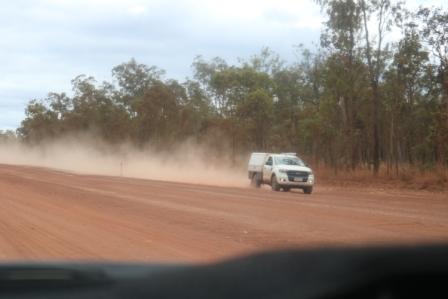
Dust and dust holes are other hazards to get used to. Every car that passes will bring with it a cloud of dust and if there are a few travelling in a row you practically have no vision for a while, until the dust clears. You have to drive with headlights on all the time, as sometimes this is all you see through the dust clouds. Road trains drag a lot of dust too so you can expect a ‘brown out’ as they pass by. Dust holes are another thing to watch for, some are signposted, others not and you have to be vigilant so a tyre doesn’t disappear down one and then spit you out with a jolt.
We have a quick stop at the Musgrave Roadhouse next and buy diesel with the prices now rising from around the $1.90 per litre we have been paying this trip to now $2.50, but this won’t be the most we pay. From here on we start noticing lots of wandering cattle on roadside edges, we spot a dead dingo on the road and unfortunately for some travellers, caravan parts. The amount of solar panels we see is staggering and there are assorted other bits and pieces discarded on the side of the road.
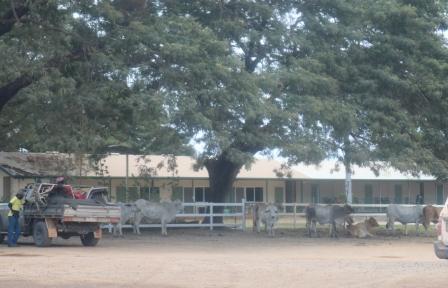
We found the drive even more interesting than we expected with curves and bends, lots of vegetation and animals to spot along the way, so it does take a lot of concentration and vigilance with all the hazards.
Soon enough we get some really bad sections of dirt road and the dreaded corrugations we’d heard about began. Teeth rattling, bone shaking ruts in the road have you trying to work out what’s the best speed to take them on. Too slow and everything rattles on the car and in your body, too fast and the car dances across the road without too much control, so you have to try and find a happy medium or better yet get off the road for the smoothest ride.
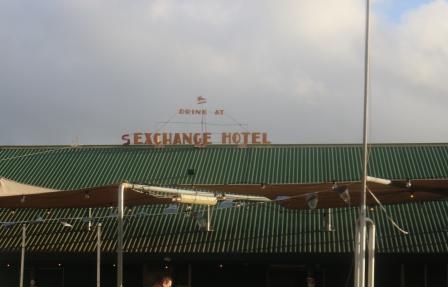
A little over 300 kilometres from Lakeland, we make our first night’s camp stop at the town of Coen, in the campground behind the Exchange Hotel, or Sexchange as it is known now, thanks to the addition of some plumbing S bend attached to the hotel sign. Some cheeky plumbers with a sense of humour were staying at the hotel once, and added the letter for a joke and it has stuck ever since.
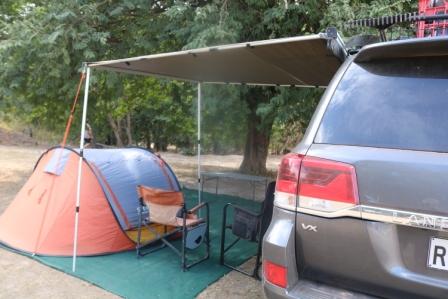
Our first night tenting in many, many years but it was an easy set up and restful night in the speedy tent with foam mattresses and the car awning extended for our kitchen area.
To be continued…
Glenys
Discover more from Caravan Correspondent
Subscribe to get the latest posts sent to your email.
 Caravan Correspondent
So inspiringly written Glenys, you’re making me want to pack up and go.
LikeLiked by 1 person
Oh thank you, we found it challenging but so worth it😊
LikeLiked by 1 person
A great start to your adventure. The Telegraph Track is fine for those camping television shows where they are given vehicles and caravans to go bush bashing. For the rest of us the other road is a fine choice. 😁
LikeLiked by 1 person
A wonderful start to your trip. I got to say thar despite the corroguations, dust , etc and the wear and tear to self and vehicles I love travelling on dirt roads.. it creates a much greater sense of adventure than trundling along on bitumen.
LikeLiked by 1 person
I agree!
LikeLiked by 1 person