If ever there is a town in Australia to sum up the epitome of resilience, perhaps it’s Innisfail on the Cassowary Coast of north Queensland.
The town has been a victim of a number of severe cyclones over the years which caused major damage in 1906, 1918, 1986, and 2006.
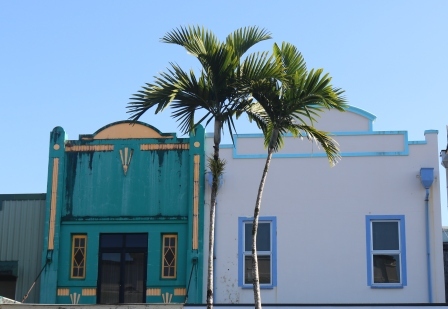
The town known for its sugar and banana industries, is around 90 kilometres south of Cairns and what you quickly notice on arriving in town, are the many Art Deco style buildings it has. This came about when the town was rebuilt after the devastating cyclone of 1918 when the town was almost wiped out. It was one of the worst ever cyclones to hit the Australian coast and was followed by a tidal surge which caused flooding of all beaches and rivers nearby.

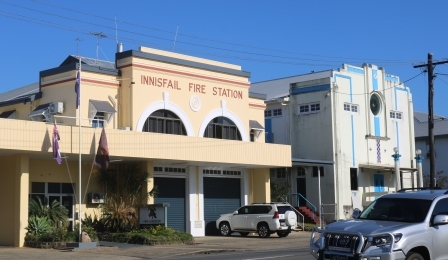
The only buildings standing after the cyclone were those made of reinforced concrete, so that was the material used when the rebuilding occurred and as the popular architectural style of the time was Art Deco, it was the style adopted. There was some adaption made though for the tropical climate, with many of the buildings having pitched roofs.
When you visit Innisfail you can pick up a guide book which shows where to find all the buildings and names the businesses they originally housed. Here are some of the iconic buildings.
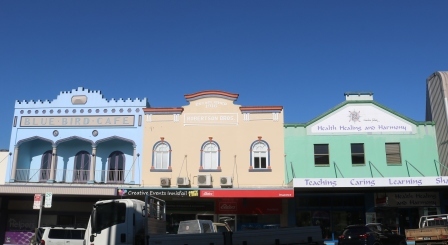
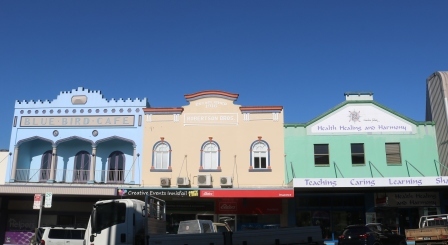
Blue Bird Café – built in the 1920s was an upmarket café where farmers and their families would lunch when in town for business. Upstairs was a dance hall and wedding reception space.

Robertson Bros. building – this was the second store opened by business partners and brothers Peter and James Robertson. This building was opened in 1937 but the words on the building refer to when Robertson Brothers business was established in 1916.

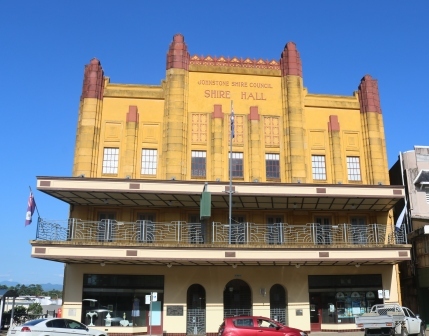
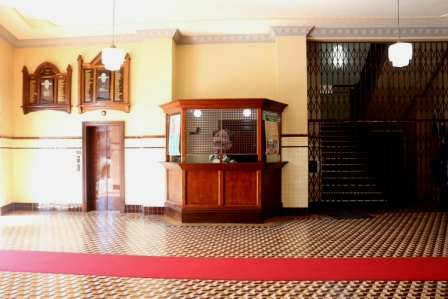
Johnstone Shire Council, Shire Hall – this building was constructed in 1938 and has three storeys and a basement. Its distinctive elaborate design has typical ornamental Art Deco designs, wrought iron balustrades and arched doorways at street level. If you think it looks busy on the outside, step inside the building to take a look at the Art Deco features in the foyer, including decorative ceiling roses, deco light fittings and a wild patterned terrazzo tiled floor. In 2006 Cyclone Larry damaged this building again but it was renovated and restored.

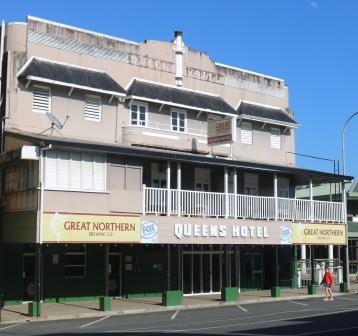
Queens Hotel – was built in 1926 and was owned in the 1950s by Mr See Poy, a Chinese Australian storekeeper. It was an upmarket establishment with three storeys and a basement and has a central Art Deco ornament on the building and corrugated iron window shades on the second floor.
There are more than a dozen of these incredibly ornate Art Deco buildings to find in the heart of town which you can find on a self guided walk.
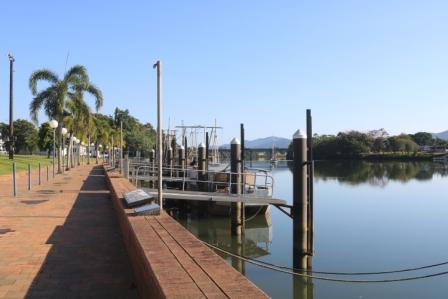
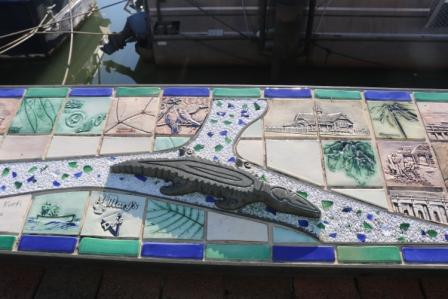
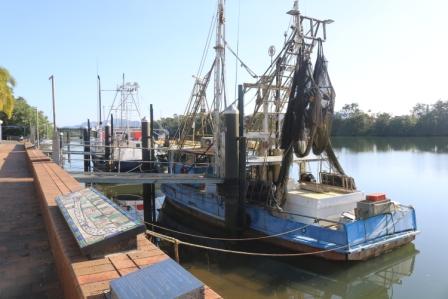
Another great spot to take a walk and find some interesting artworks, is along the Fitzgerald Esplanade next to the Johnstone River. A series of mosaic stories in clay tiles and terrazzo are displayed which depict the history and current lifestyle of Innisfail.
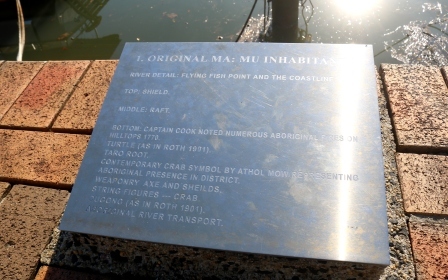
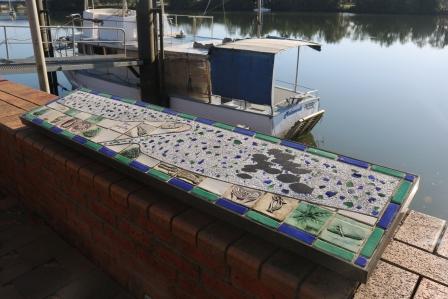
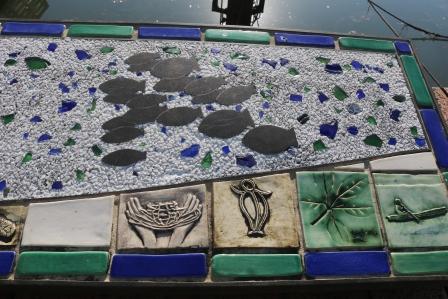
The stories were collected from locals and the tile designs were created and made locally. The series is called – River Reflections.
Enjoy discovering Innisfail
Glenys
Discover more from Caravan Correspondent
Subscribe to get the latest posts sent to your email.
 Caravan Correspondent
Such a great town. I love the colour and playful designs.
LikeLiked by 1 person
What a wonderful vibrant town with a cluster of colourful art deco buildings that increases its charm. Thanks for sharing and have a good day 🙂 Aiva xx
LikeLiked by 1 person
Thanks Aiva, it’s wonderful finding beautiful surprises when we travel. 😊
LikeLiked by 1 person
I can’t believe I missed Innisfail when I toured Australia. I love Art Deco and it looks like a real gem.
LikeLiked by 1 person
I wouldn’t have known without visiting either! Australia is just so big and there are stories in towns big and small everywhere. 😀 We are gradually making our way to all of them. 🤞
LikeLiked by 1 person
Aren’t all the buildings gorgeous! It’s a long time since I visited Innisfail.
LikeLiked by 1 person
They’re amazing, it has to one of the best places to see buildings of that era in such numbers. They were so bold with pattern and colour back then.
LikeLiked by 1 person